

Early Years Foundation Stage (EYFS)
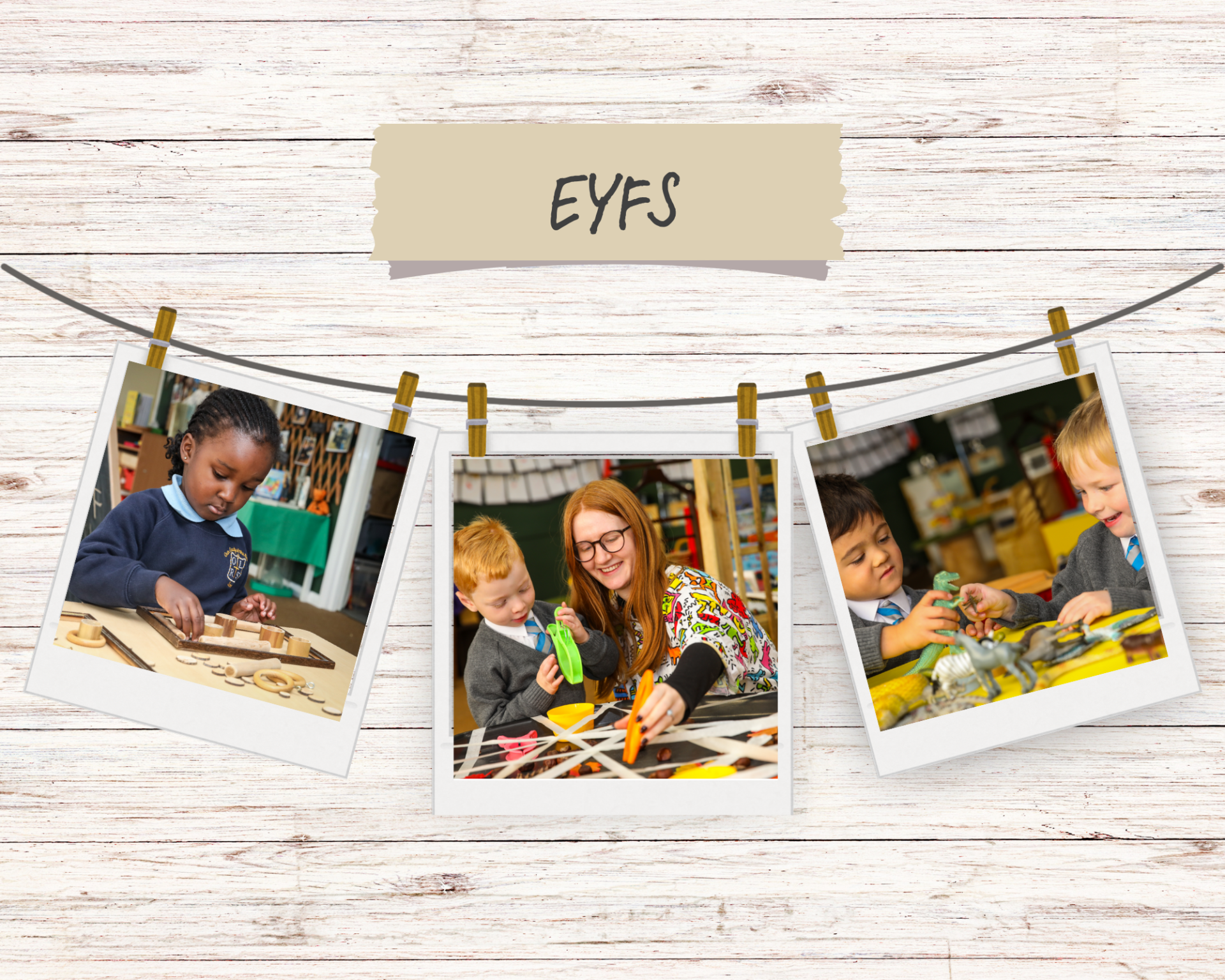
The Early Years Foundation Stage includes Nursery and Reception and marks the beginning of children’s school learning journey. These years shape how children see themselves as learners and how they engage with the world around them. Our EYFS provision is designed to support children’s development across all areas of learning while fostering confidence, curiosity and a strong sense of belonging within the school community.
The EYFS curriculum is structured around the seven areas of learning, with particular emphasis on the prime areas of communication and language, personal, social and emotional development, and physical development. These areas provide the foundations children need to access learning successfully and are developed through a carefully planned balance of play, exploration and adult-guided teaching. Skilled staff use their knowledge of child development to sequence learning thoughtfully and to support each child’s progress.
Oracy sits at the heart of learning in EYFS. A language-rich environment enables children to listen attentively, develop vocabulary and communicate their ideas with increasing confidence. Through stories, talk, play and shared experiences, children build the communication skills that underpin learning across the curriculum and support both social interaction and emotional regulation.
Foundational skills are developed through meaningful, practical experiences that prepare children for the next stage of learning. Early reading and writing are supported through phonological awareness, storytelling and mark making, while early mathematical understanding is built through exploration of number, pattern and measure. Children are encouraged to develop independence, self-regulation and positive learning behaviours, enabling them to approach new learning with confidence and resilience. Inclusive practice and careful observation ensure that individual needs are identified early and supported effectively.
By the end of Reception, children are well prepared for the transition into Key Stage One. They move on as confident communicators, increasingly independent learners and active participants in school life, with secure foundations that enable them to engage successfully with more structured learning.